
Which Slot Canyon Should You Visit? Comparing Upper v. Lower Antelope Canyon
A practical comparison of access, terrain, tour logistics, photography, and timing when choosing between Upper and Lower Antelope Canyon.
If you are deciding between Upper and Lower Antelope Canyon, this guide compares access, timing, terrain, tour logistics, photography, and whether both can fit into one day.
Guide Overview
Are you trying to decide whether to visit Upper v. Lower Antelope Canyon? You cannot go wrong with either choice.
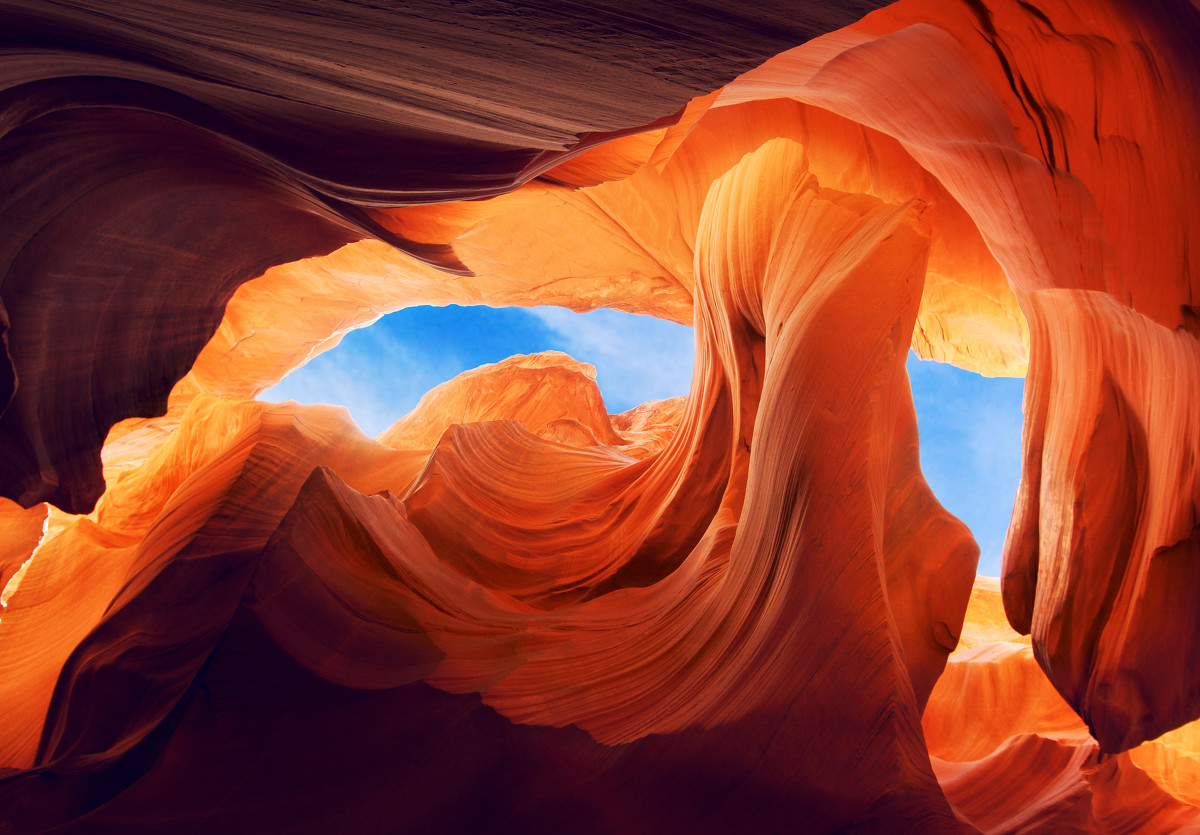
Antelope Canyon is a singular and sacred place located in Arizona. It is a world-famous destination in its own right but also makes the perfect add-on stop for a Grand Canyon or Zion National Park road trip.
When I started on my year of adventure, Antelope Canyon was high on my list of must-sees. I was drawn in by the unique topography and sweeping red curves I had seen in photos. I wanted to capture the sunbeams shining in through the canyons and feel connected with nature.
I could not believe a place like this actually existed, let alone in the United States. I found a cheap fare to Las Vegas and crafted an Arizona, Utah, and Nevada five-day itinerary around my visit to Antelope Canyon.
"Do not call it a dream, call it a plan."
Want to know how to turn your slot canyon plans into reality? Read on to find out more about Upper v. Lower Antelope Canyon.
Where are Upper and Lower Antelope Canyon?
Upper and Lower Antelope Canyon are both located in Page, Arizona, about two hours east of the Grand Canyon South Rim and four hours north of Phoenix by car. To get there, you can fly into Las Vegas or Phoenix. Both cities allow you to reach Antelope Canyon within a day.
You will need to rent a car since there is no bus or public transportation that can take you directly to Antelope Canyon. If you do not want to drive yourself, the main alternative is to take an organized tour.
If you are comparing routes, timing, and canyon sections, this Antelope Canyon visitor guide is a useful place to start.
Arizona is filled with fascinating destinations to include in your road trip, but you will not find another place quite like Antelope Canyon.
Distance Between Upper and Lower Antelope Canyon
The two canyons are distinct but are both located inside Lake Powell Navajo Tribal Park, within a 15-minute drive of each other. They are both accessed by Highway 98, a long, straight road that heads east out of Page.
You will not be able to drive your car straight to the canyon entrance. Instead, you drive to your tour provider, park at their shop, and then the operator takes you to the canyon, either by vehicle for Upper Antelope Canyon or by foot for Lower Antelope Canyon.
Do You Need a Guide?
You absolutely need a guide to visit either Lower or Upper Antelope Canyon. This is Navajo land and visitors are not allowed to wander unaccompanied.
There are only two tours that service Lower Antelope Canyon. They are similar in price and service. Lower Antelope Canyon requires descending on steep steps, so it is not a wheelchair-friendly location. Upper Antelope Canyon, by contrast, is level once you step out of the tour vehicle.
There are at least a dozen different tour providers that service Upper Antelope Canyon, with packages varying from a simple walk-through to dedicated photography tours. Upper Antelope Canyon tours sell out months in advance because the classic sunbeams appear there.
Upper and Lower Antelope Canyon in One Day
You can choose to do both Lower and Upper Antelope Canyon in one day, and even fit in Horseshoe Bend for a Page highlights itinerary. Aim to be at Upper Antelope Canyon for the sunbeams between 11 a.m. and 2 p.m. Visit Lower Antelope Canyon either first thing in the morning or later in the afternoon to accommodate both places.
A good sample timeline would be to visit Upper Antelope Canyon between 10:30 and 11:00 a.m., finish by 12:30 to 1:00 p.m., head to Lower Antelope Canyon and enter around 2:00 p.m., then finish the day at Horseshoe Bend around 4:30 p.m.
You are not allowed to bring bags into the sites but you can bring water. You will not always find water bottles readily sold in the area despite it being a desert, so come prepared.
Best Time to Visit Lower Antelope Canyon
In order to see the light beams at Upper Antelope Canyon, you have to go in the spring and summer months, though both sites are open year-round. The colors at Lower Antelope Canyon change with the seasons so this is a site that can reward repeat visits.
The sunbeams in Upper Antelope Canyon can be seen beginning after the spring equinox in March and ending around the fall equinox in September. Prime sunbeam season is between June and August, since the higher the sun the more light comes in. If you are visiting between September and March, Lower Antelope Canyon might be the better option.
Comparing Upper v. Lower Antelope
In comparing Upper v. Lower Antelope Canyon, there are several differences to note. Lower Antelope Canyon requires descending a series of stairs and ladders. Guests enter from one location and walk straight through to the exit on the other side. Upper Antelope Canyon is level once you disembark from your guide's vehicle, and groups enter and leave from the same entrance.
This makes Upper Antelope Canyon feel slightly more crowded since you have large numbers of people inside one set space moving in both directions.
Upper Antelope Canyon is a mix of warm colors like reds, oranges, yellows, and browns, while Lower Antelope Canyon often reveals cooler tones and more variation in texture.
Photography Basics
If you are bringing a DSLR camera, which is required in order to take a photo tour, you do not want to change your lens in the canyon due to all the sand. You are also going to want something to help blow the sand off your equipment.
If you are an iPhone user, make sure you have your flash turned off and try experimenting with the vivid warm setting to highlight the canyon colors. Also, take panoramic photos up and down to better capture the walls of the canyons.
Make sure your guide knows you want to take plenty of pictures, since they walk these canyons every day and can help direct you to the best spots.
The Verdict: Upper or Lower Antelope Canyon?
If pressed to choose one, I would say Upper Antelope Canyon when you can see the light beams because it is such a famous image and the photos are instantly recognizable.
However, photographs aside, the experience at Lower Antelope Canyon felt much more relaxed and mystical, providing the connection to nature that I had been seeking.
Of course, if you have a full day, the best option is to see them both.
WRITTEN BY JEN